
Leaving your cat at home while you travel comes with a surprisingly detailed packing list—even when your cat isn’t going anywhere. Where are the spare bowls? Which cupboard holds the litter bags? What does an ordinary evening together look like?
A useful handover puts those small details within easy reach. Think of it as a friendly introduction to your home, with enough structure that your sitter can spend less time searching and more time paying attention to your cat.
Start with one ordinary visit
Our editorial suggestion is to write the handover in the order your sitter will use it: arriving, checking in, serving food, refreshing water, tending the litter area, spending time together, and leaving.
The Cats Protection sitter checklist covers food and bowl locations, feeding directions, water top-ups, litter and waste arrangements, medication instructions, emergency contacts, and companionship or play preferences. Use those topics as a completeness check, then describe your own household in your own words.
For each part of the visit, try three short prompts: where it is, what to do, and what to report. “Food is in the lower kitchen cupboard” is easier to act on than “everything is in the kitchen.”
Keep emergency information together on the first page. Add your contact details, your vet’s details, and an agreed alternative contact if you cannot answer. If medication is part of the routine, leave the specific instructions together and walk through them with the sitter.
Walk through the routine together
Before you leave, invite your sitter to complete a practice visit while you are there. Let them find supplies, read the notes, and talk through the sequence. The places where they hesitate are useful clues about what needs a clearer label or sentence.
A simple responsibility checklist might read:
- Confirm the visit schedule and who is responsible for each visit.
- Follow the written feeding instructions and check water.
- Complete the agreed litter and waste tasks.
- Offer companionship or play according to your notes.
- Send the agreed update and raise questions promptly.
- Check the agreed doors and access points before leaving.
Treat this as a starting point to adapt together. Agree on what the update should contain, so neither of you has to guess.
Explain any feeding equipment in context
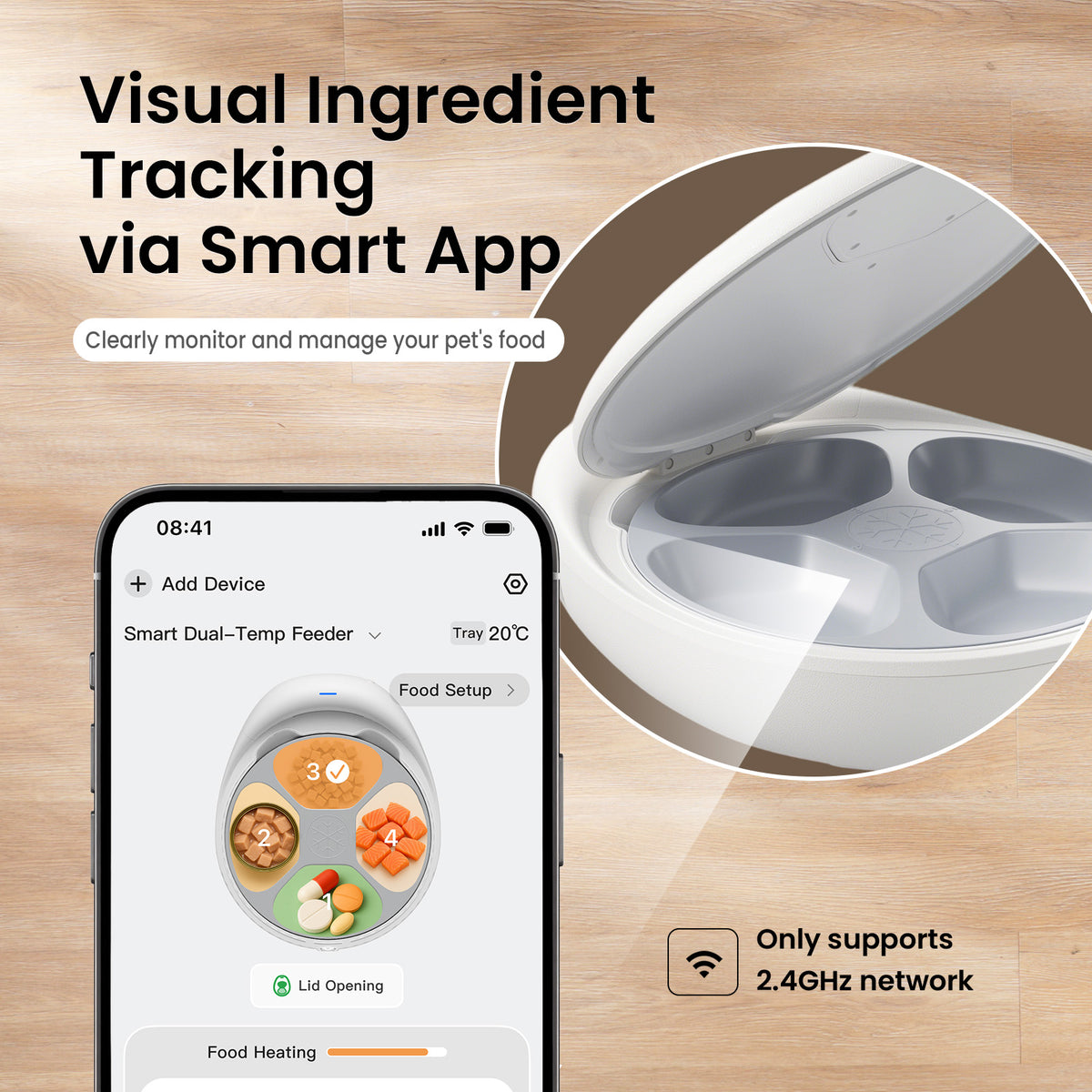
Official Robotail product image showing the F20 app and tray illustration.
If you use an F20, include it in the walkthrough. Robotail’s manufacturer description lists app-based scheduled and immediate feeding, a removable food tray, cooling, and warming before meals. These are manufacturer descriptions, not findings from hands-on testing.
Write down which settings you have chosen, what you expect the sitter to check, and when they should contact you. The F20 is a household tool; a person still needs to care for your cat. Make that person’s responsibilities explicit.
Keep food-handling notes brief. The FDA’s guidance advises washing hands before and after handling food, washing bowls and utensils after use, and promptly refrigerating or discarding unused canned or pouched food.
Leave room for the familiar details
Finish with the details only someone who knows your cat would think to mention: the toy you usually offer, the place you sit together, or whether your usual greeting involves quietly waiting nearby.
Before your next trip, set aside a few minutes for that practice visit. A clear page and a shared walkthrough are a welcoming place to begin.