Start With the Cat Already at Home
Preparing for a second cat begins with an honest question: can your home offer both cats room to settle at their own pace? Cats Protection explains that not every resident cat welcomes another, and introductions should happen slowly, with enough space.
Before buying anything, sketch your rooms and mark your resident cat’s favorite sleeping places, feeding spot, and usual routes. Our planning suggestion: preserve those familiar arrangements while finding additional places for the newcomer. Think of the sketch as a working map, ready to change as you learn what each cat prefers.
Give the Newcomer a Starting Room
Cats Protection’s preparation guidance recommends a separate starting room with essential resources, a hiding place, and somewhere comfortable to rest. This is a starting point for gradual introductions, not a deadline for sharing the whole home.
Walk through the room as its daily caretaker. Can you refresh water, scoop litter, and sit quietly without moving several objects first? Leave a clear patch of floor for these ordinary tasks. In a smaller home, temporarily relocating a chair may be more useful than adding another piece of furniture.
Map Shared Rooms Around Choice
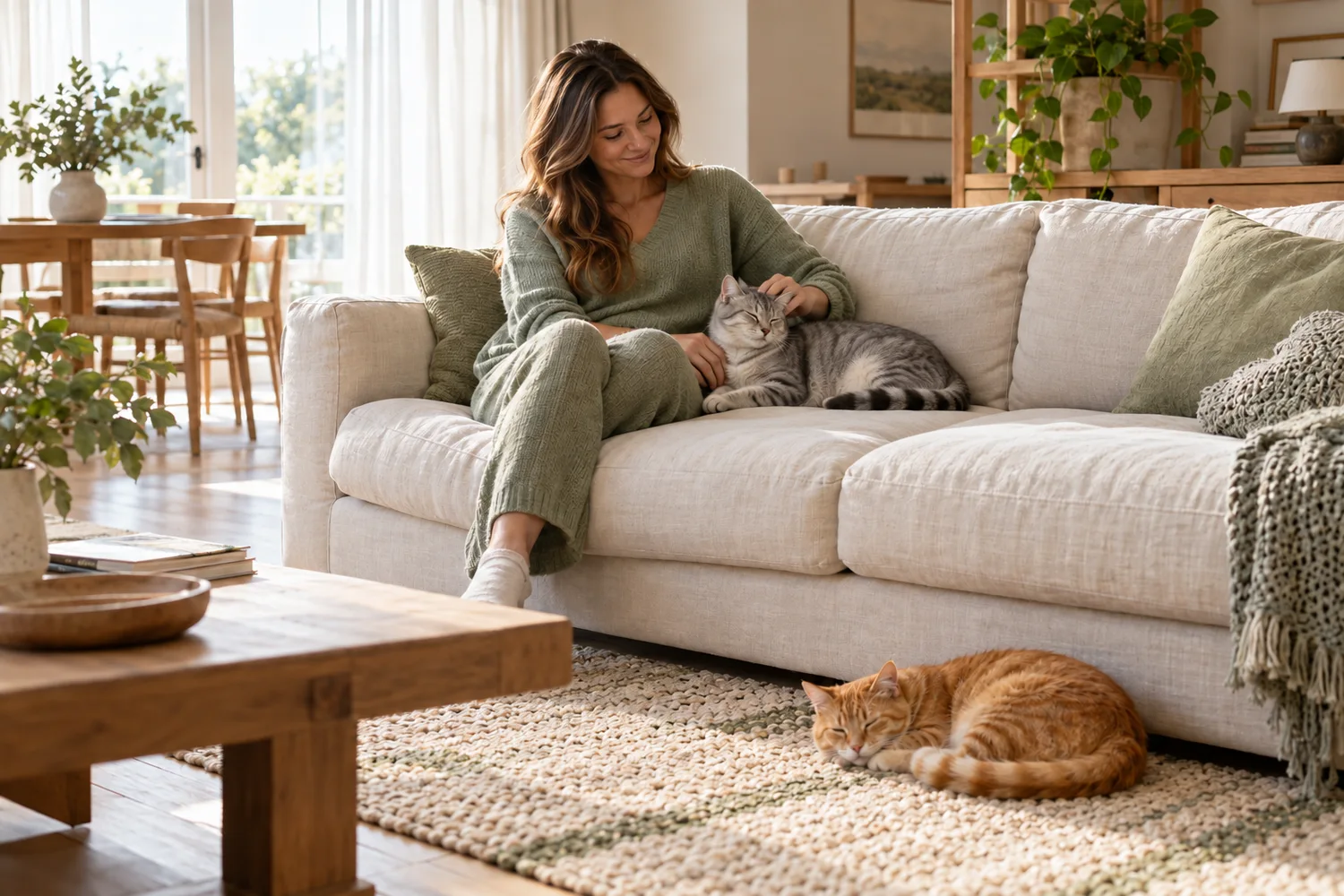
In the living room, look beyond whether two beds fit beside the sofa. Consider whether each cat could choose a resting place without approaching the other.
Cats Protection recommends essential items for each cat plus a spare, spread around the home, alongside opportunities for separation and height.
Turn that guidance into a room-by-room pencil plan: perhaps one resting spot near the window and another across the room, with suitable raised spaces where practical. Check that curtains, doors, and your own furniture use will not make those proposed spots awkward. Leave some decisions open until the cats show you where they choose to settle.
Keep Kitchen and Litter Plans Separate
In the kitchen or dining area, mark possible feeding and water locations before placing equipment. Cats Protection advises keeping the litter tray away from food and water.
Then review potential litter locations across the home. Our editorial layout principle is simple: one large litter box should not stand in for resources distributed in different places. A larger object in one corner still leaves you with one location.
Try this planning checklist:
- Identify a separate starting room.
- Mark distinct places for essential resources.
- Keep litter away from food and water.
- Note quiet retreats and suitable raised resting spots.
- Check doors and everyday walking routes.
- Leave room to reach, clean, and maintain equipment.
Choose Equipment You Can Reach and Maintain
Measure the usable space around equipment, including the room you need for upkeep. Imagine carrying out the cleaning steps while a laundry basket or open cupboard occupies nearby floor space.
The official Robotail C42 information describes a semi-open entry and a removable roller. Compare those details with your proposed location and maintenance routine. Equipment still needs human care, and its placement remains only one part of preparing for gradual introductions.

Official Robotail product image; manufacturer illustration, not an in-home test.
Leave Room for the Plan to Change
Before arrival, walk through your map once more. Which arrangements are easy to adjust? Could you move a resting spot or keep a room separate for longer if needed?
A welcoming home for two begins with thoughtful options and patient attention. When you are ready, gently compare your room’s needs and upkeep access with the official model information.